The Azure Heart of the Balearics: Navigating Posidonia Protection on Your Mallorca Yacht Charter
The crystalline waters of Mallorca are a siren's call to the discerning yachtsman. The allure of dropping anchor in a secluded cala, the sun warming your skin as the turquoise sea laps against the hull, is the very essence of a luxury charter experience. Yet, beneath this idyllic surface lies a fragile, ancient ecosystem of profound importance: the Posidonia oceanica meadows. These underwater forests are not merely seagrass; they are the lungs of the Mediterranean and the bedrock of the Balearic's marine biodiversity. For the privileged few who explore these waters by yacht, understanding and respecting the rules that protect this natural treasure is not just a legal requirement—it is a mark of true seamanship and a commitment to preserving the very beauty that draws us here.
At Yacht Rentals Mallorca, we believe that luxury and sustainability are two sides of the same coin. A truly exceptional charter is one that exists in harmony with its environment. This guide is designed to provide our clients with the essential knowledge to navigate Mallorca's anchoring regulations, ensuring your voyage is both breathtakingly beautiful and impeccably responsible.
Unveiling the Underwater Treasure: What is Posidonia Oceanica?
Often mistaken for seaweed, Posidonia oceanica is, in fact, a flowering plant that evolved from terrestrial ancestors and adapted to life in the sea millions of years ago. It forms vast, dense meadows across the seabed, a habitat so vital it has been granted protected status by the European Union's Habitats Directive and recognized as a UNESCO World Heritage site in the waters between Ibiza and Formentera.
These meadows are a cornerstone of the marine environment for several critical reasons:
- Oxygen Production: Posidonia meadows are veritable oxygen factories, with a single square meter generating up to 14 liters of oxygen per day. They are one of the most important sources of oxygen for the Mediterranean's coastal waters.
- Biodiversity Hotspot: They provide a crucial nursery, feeding ground, and shelter for hundreds of species of fish, crustaceans, and mollusks. The intricate root system (rhizomes) stabilizes the seabed, while the leaves offer protection from predators.
- Natural Water Filter: The dense canopy of leaves traps sediment, clarifying the water and contributing to the spectacular transparency for which Mallorca's calas are famed.
- Coastal Protection: The meadows act as a natural barrier, dampening the force of waves and currents, which helps to prevent beach erosion and protect the coastline.

A Note on Time: The Posidonia meadows you see today are ancient, with some plants estimated to be thousands of years old. They grow incredibly slowly, with their rhizomes extending horizontally at a rate of only a few centimeters per year. The damage from a single carelessly dropped anchor can destroy a patch of meadow that took centuries to grow.
The Unseen Threat: How Anchoring Causes Irreparable Harm
The primary threat to these vital ecosystems is unregulated anchoring. When a yacht's anchor and chain are dropped onto a Posidonia meadow, the consequences are devastating. The heavy anchor plows through the delicate rhizomes, uprooting the plants and carving scars into the seabed that can take centuries, if ever, to recover. As the yacht swings with the wind and current, the anchor chain drags across the bottom, scything through the leaves and further destroying the meadow's structure. This mechanical destruction not only kills the plants but also destabilizes the entire ecosystem, leading to a loss of biodiversity and increased coastal erosion.
Recognizing this threat, the Balearic Government has implemented strict regulations to control anchoring activities across the islands. Ignorance of these rules is no excuse, and the penalties for damaging Posidonia are severe, reflecting the ecological gravity of the offense.
Mallorca's Anchoring Rules: What Every Charterer Must Know
The fundamental principle is simple: It is strictly illegal to anchor on Posidonia oceanica meadows. The responsibility lies with the captain of the vessel to ensure the anchor is dropped only on sandy or rocky seabeds. Fortunately, the government and various marine bodies have provided tools and guidelines to make compliance straightforward.
Identifying Posidonia Zones
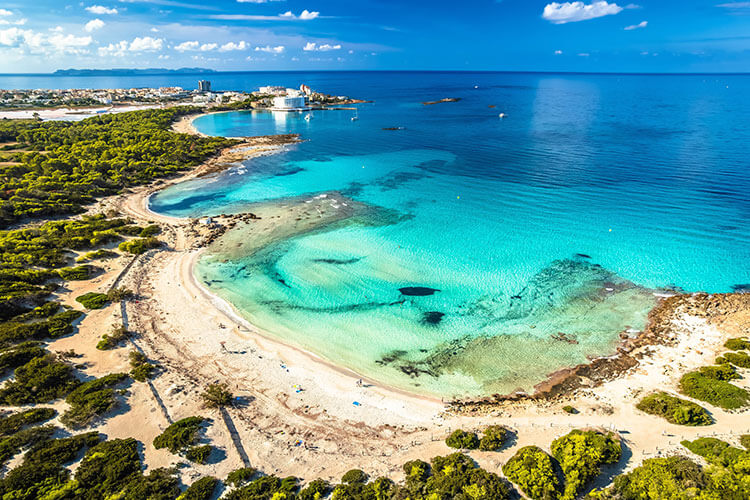
From the deck of your yacht, Posidonia meadows are often visible as dark patches on the seabed, contrasting with the bright, light-colored sandy areas. The crystal-clear water in most of Mallorca's popular anchorages makes this visual identification the first and most important step.
For more precise navigation, the Balearic Government has developed the Posidonia Maps, which are integrated into many modern chart plotters and available through dedicated mobile applications. These apps use GPS to show your vessel's position in real-time overlaid on a detailed map of the seabed, clearly marking the seagrass meadows. We highly recommend all charterers download one of these tools.
Fines and Enforcement
Patrol boats from the Guardia Civil and environmental agencies actively monitor popular anchoring spots. If a vessel is found anchored on Posidonia, the captain will be instructed to move immediately. Fines are substantial and can range from several hundred to many thousands of euros, depending on the extent of the damage. In severe cases, the vessel can be impounded. For a comprehensive overview of the legal framework, we recommend reviewing the latest Mallorca Yacht Charter Rules 2027: Licences, Passengers, Posidonia and Travel Documents.

Low-Impact Mooring Buoys
In some of the most popular and ecologically sensitive areas, such as the waters around the Cabrera National Park, traditional anchoring is completely forbidden. Instead, a network of regulated, low-impact mooring buoys has been installed. These buoys are permanently fixed to the seabed with environmentally friendly systems that avoid any contact with the Posidonia. Reserving one of these buoys in advance is mandatory and is a perfect example of how to enjoy a pristine location with zero impact.
A Practical Guide to Responsible Anchoring
Anchoring with care is a skill that enhances the pleasure of your charter. It is a quiet satisfaction, knowing you are a guardian of the sea.
- Plan Ahead: Before arriving at a cala, consult your chart plotter or Posidonia app to get an overview of the seabed layout.
- Approach Slowly and Observe: Enter the anchorage slowly and have a crew member on the bow act as a lookout. The sunnier it is, the easier it is to distinguish sand from seagrass.
- Choose Your Spot: Identify a clear, large patch of sand. Ensure you have enough room to swing without your anchor chain encroaching on the nearby meadow.
- The Snorkel Test: If there is any doubt, the most reliable method is to send a crew member with a mask or swimming goggles to visually inspect the seabed before dropping the anchor. This simple check provides absolute certainty.
- Drop, Don't Drag: Position the yacht directly over your chosen sandy spot and release the anchor. Avoid dropping anchor while still moving forward, as this will cause it to drag.
- Pay Out Scope: Let out the appropriate amount of chain (a 5:1 ratio of chain length to water depth is a good starting point) and ensure the anchor is well set in the sand before switching off the engines.
By following these steps, you can relax in the knowledge that your yacht is secure and the delicate environment beneath you is safe.
Responsible Enjoyment in Mallorca's Finest Anchorages
Many of Mallorca's most celebrated calas are surrounded by extensive Posidonia meadows, which is precisely why their waters are so clear and full of life. In these areas, finding a sandy patch is key. For instance, in the stunning bay of Portals Vells, there are large sandy areas in the center of each of the three coves, offering secure holding. Similarly, when exploring the 12 Best Anchorages in Mallorca, you will find that the most desirable spots are those that offer both breathtaking scenery and clear, sandy bottoms for safe anchoring.

Tip for Charterers: Your yacht's captain is an expert in local conditions and regulations. They are your best resource for finding safe and beautiful anchorages. Trust their knowledge and do not hesitate to ask questions about the local marine environment.
A Legacy of Preservation
Protecting the Posidonia meadows is a shared responsibility that ensures the magic of Mallorca's coastline will endure for generations to come. It is a commitment to preserving the health and beauty of the Mediterranean Sea. By anchoring responsibly, you are not just following rules; you are actively participating in the conservation of a world-class natural treasure.
Your unforgettable journey through the calas and bays of Mallorca awaits. Let us help you craft a bespoke charter experience that is as respectful as it is remarkable.
To book your luxury yacht charter and explore the pristine waters of Mallorca responsibly, contact the experts at Yacht Rentals Mallorca today at +34 674 42 76 92.